Showing posts with label NC Wilmington. Show all posts

Tuesday, April 28, 2015

NC Fort Fisher, North Carolina Aquarium, Kure Beach, Carolina Beach and Wrightsville Beach


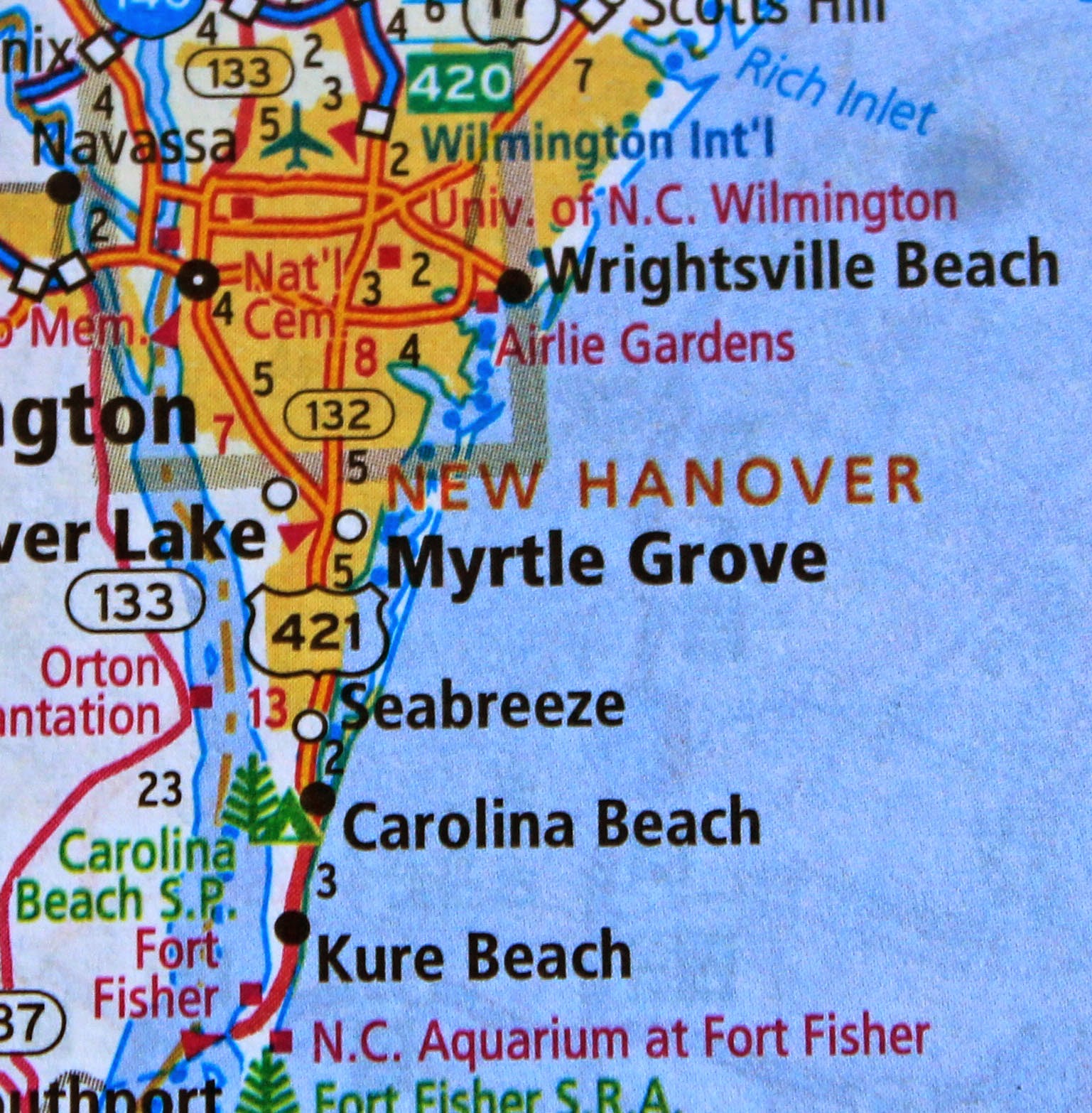
     Welcome back to the coast of North Carolina.  We are moving northward from the Cape Fear river today, covering the stretch from Kure Beach up to Wrightsville Beach.  


     At the mouth of the Cape Fear River lies the remains of Fort Fisher, a civil war defensive position built by the Confederacy.  Today, the area holds a number of treasures for those that are willing to take the forty five minute drive out from Wilmington.  There is also A Ferry that runs between here and Southport.


     The North Carolina Division of Parks maintains this area, which constitutes about six miles of fine sand beach on one side and tidal estuaries that abut the Cape Fear River on the other.

     There is a large visitor's center with ample bathrooms and a lot of picnic area.  Indoors there are some exhibits of local wildlife.


     This is the first place since Amelia Island in Florida where you can drive your car on the beach.


     Next door is Fort Fisher and the Fort Fisher Museum.  


     This fort was built to protect Wilmington's shipping interests, and served that purpose from 1861 to 1865.  Huge mounds of dirt were built up which gave canon operators a great field of view and good range to fire on ships trying to enter the river.

     Between mid December 1964 and mid January of 1865 the fort came under Union attack.  The fort finally fell on January 12th.  However, the greatest loss of life was yet to come.  On January 16th, drunken Union soldiers who were wandering around with lanterns and randomly firing off weapons accidently set ablaze the main magazine, killing a total of 200 men.


     There are a number of civil war related articles in the museum - the most interesting to me was this prosthetic leg.  


     Someone went to great lengths to hollow this out and even provided a somewhat flexible ankle joint.  Reminds me of Amputee Sam Campfield in Savannah who told me that when his prosthetic leg was stolen he was hopping mad.  


     And just up the street lies the North Carolina Aquarium at Fort Fisher.


     This is a beautiful facility whose exhibits focus on local river and marine life.


     They even have a live albino gator here, but in spite of waiting for an hour or so I never could get a clean photograph of him.


     Numerous large tanks mimic local ecosystems.  The displays are all well light and easily seen.


     I think these are the invasive Lion Fish - I don't know my marine species that well and I forgot to take a picture of the sign.


     But the jellyfish display was really striking.  It is a circular tank about twelve feet tall with black lights that highlight these odd creatures as they do their graceful underwater dances.


     After six uninterrupted miles, the public beach ends abruptly.


     The properties are typical of beach development in the 1960's and 1970's.


     This stretch of land is known as Kure Beach, whose last census listed it as home to about 2,000 residents.


     A lot of the houses seem to be set up as seasonal rentals, but besides a small convenience story there isn't much commercial property.


     It has a bit of an idyllic look - the houses are pretty uniform in style.  I love the variety of colors that are used in these beach communities.


     Sometimes the colors and the architecture combine to look a bit like a piece of art.


     Immediately adjacent is Carolina Beach, with a few condo high rises and a number of smaller hotels.


     I didn't see anything too far out of the ordinary here - but the high vantage point of one of the hotel's top floors allowed an interesting photo of some pelicans on the wing.


     The last mile of Carolina Beach is Freeman Park, with ample camping sites right along the beach.  


     Masonboro Sound is the next geographic feature, the then there is Masonboro Island, an atoll that is a nature preserve and runs along the next six miles of the Atlantic.


     Which brings us to the third and major beach that serves the Wilmington area - Wrightsville Beach.


     Wrightsville Beach has a large variety of shops and restaurants, but isn't too over-developed either.  

     
     There are a few high rises and hotels - this view is of the pool at the Holiday Inn on Wrightsville Beach..


     We have moved about fifteen miles off the river now, and behind the beach is some tidal estuary.  This is home to numerous marinas and a thriving community.  An early morning photo of the tidal marsh just before a rain shower looks a bit surreal.


     Construction is continuing here - it won't be too long until this area is fully developed.


     A big thanks to Jim Batey and the fellows at Zulu Discovery that helped me get these photos on the water.


     If you missed it last year, you might want to read the article about Jim's Discovery just off the coast here.  It is one of those things that has the potential to re-write the history books.

     And that brings us to today's "Faces in the Crowd" photo.


     And today's parting shot(s) are of some of the newest models in the fast growing golf cart business.  I guess this is a luxury model?


     And I am not quite sure how to classify this one . .


Click Here if you can donate a few dollars to help me along on this journey, Click Here to email me and Click Here to go to the reflections website.  

Have a great day !!
David

Monday, April 27, 2015

NC Wilmington, Wilmington Convention Center, Wilmington Railroad Museum


     We are 7 miles up the Cape Fear River in Wilmington NC.  Today we are taking a look at the waterfront in this historic community.


     This stretch of land was inhabited by the Algonquin Indians up until the 1720's when English colonists began populating the area.  The area was alternately called "New Carthage," "New Liverpool" and "Newton" before the current name of Wilmington emerged around 1740.  By 1767 two thirds of the population was African slaves who primarily worked in the timber and naval stores trades.

Wilmington riverfront around 1920

     Wilmington then became a hub for trade, and the railroads and shipping industries became the predominant industries.  As we saw in yesterday's article, the area became a large ship manufacturer in the mid 1900's.  But through tremendous efforts of the local citizenry, most of the debris of those eras is now cleaned up and the city has remade itself.


     This is an Embassy Suites hotel and parking garage going up beside the brand new convention center in Wilmington.  The riverwalk that started over a mile back down the river is being extended here, making it the longest on the east coast of the United States.


     A large marina that is protected on three sides has been added alongside the already mostly calm river.  


     Work is wrapping up on this phase of the project, and they are readying for the next.  I am told over a half billion dollars have been spent putting this site together.


     The convention center itself is over 100,000 square feet. In all of the hallways old photos show scenes in and around Wilmington from years past.


     The banquet facilities are large and airy - there are two adjacent rooms this size with a retractable wall between.


     There is also a large commercial kitchen . .


. . and a big exhibit hall.


     The old photographs lining the wall are really remarkable - this one is about eight feet tall.


     Numerous smaller pieces adorn the walls, each clearly marked with the date and the scene it depicts.


     This really is a world class facility, and I am sure that tens - if not hundreds of thousands of additional visitors a year will be attracted.  

     Right next door is another item of interest - the Wilmington Railroad Museum.


     Executive director Mark Koenig, who was part of the committee that put together the artwork next door at the convention center, was kind enough to spend some time with us.

Mark Koenig
     
     The museum has space constraints that have not allowed it to be on as grand a scale as Savannah's Railroad Museum, but it makes up for it with great content.

     The exhibits focus on the trades, occupations, tools and workplaces of the railroad industry.  Here is part of one exhibit that tells the story of all the women who took jobs with the railroad during the war.


      The exhibits manage to be quite informative without being overly cluttered.  


     One exhibit talks about the history of the Railroad Police.  Here is an arrest log from back in the 1930's.


     It seems most of the arrests were for "train hopping," a common thing back in the great depression as men tried to find work.  In a railroad car outside the museum a scene depicts just such an arrest.


     We met several modern day "train hoppers" at the Rainbow Gathering in Florida a couple of months ago, and I have to say none of them had clothes this nice.  Other areas in the museum document the codes that these "hobos" left in different places to alert their fellows to danger or lead them to resources they could utilize.


     There are a lot of small exhibits of interest - the above is a piece of "slag" that builds up in the coal burners over time, and  replacement brake shoe for a train car.

     I don't know exactly who was responsible for it, but Wilmington seems to have some of the best collections of relevant old photos of anywhere we have been so far.  Here is a local train crossing the river.


     One of the museum's most interesting exhibits is the 1,200 square foot model train "city" in the back room.


     Scores of talented local craftsmen donated some 50,000 hours to put together an accurate depiction of Wilmington in the 1940s.


    Included are scenes from local industries just out of town, like this aggregate facility and traveling circus.  There is even a wedding and a funeral to be found amongst all the other activities.

     Speaking of activities, Mark and a whole bunch of other railroad enthusiasts got together and spent a year of preparation in order to set the world record for the longest model train.  They set up next door in the newly opened convention center's exhibit hall back in April of 2011.


     When completed, the train included over 30 locomotives and 1700 freight cars.  The record length of 925 feet was over 30 feet longer than the old record.  The train traveled 750 feet, well past the required distance it had to run under its own power. 

     When you come to Wilmington, if you have any interest in the railroads this museum is a good spot to spend a relaxing afternoon learning a bit about an industry that has been crucial to our economic growth.

     On another subject, this is the worst time of year for our fellows who struggle with asthma.  If you are from the south, you know about this pine pollen issue.  It gets everywhere.      


     But spring also brings frequent rain showers, so it doesn't seem to be long before it is all washed away.  

     Azaleas, plum trees, pear trees and roses are all coming into bloom here at the moment.  I always love the riot of color that spring brings.  Here are a couple of roses I found attractive.


     Which brings us to today's "Faces in the Crowd."  I have always wanted to capture "The Look" - as in when someone give us "The Look."  Well, I captured a friend's teenage daughter giving her brother "The Look."


     So, if you didn't know what "The Look" looks like, now you do.  Look out for it.

     And today's parting shot:


Tomorrow we will head back out to the coast and explore the beaches the border Wilmington.  Meanwhile, Click Here if you can donate a few dollars to help me along the way with this journey, Click Here to read today's meditation, and EMAIL me here. 

Have an awesome day !!
David